Eco-Friendly UV Digital Labels for Food: Why UV-LED Curing is the Sustainable Choice
Eco-Friendly UV Digital Labels for Food: Why UV-LED Curing is the Sustainable Choice
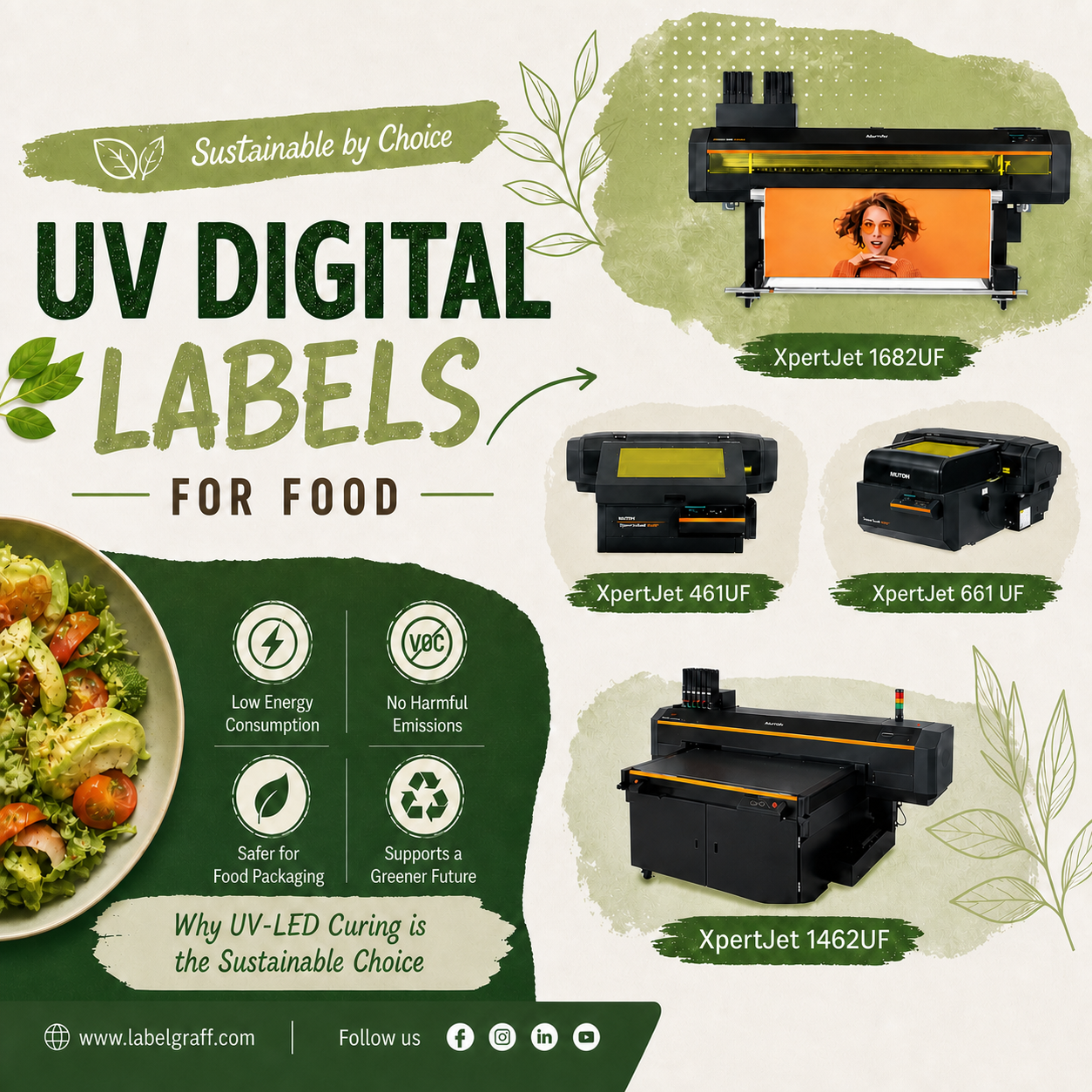
The food industry is undergoing a significant transformation, with sustainability becoming a core requirement rather than a nice-to-have. From ingredient sourcing to packaging, every aspect of food production is being scrutinized for its environmental impact. One area that has seen remarkable innovation is label printing—and UV-LED technology is at the forefront of this sustainable revolution.
The Growing Demand for Sustainable Food Labels
Consumers today are more environmentally conscious than ever. They read labels not just for nutritional information, but also for sustainability credentials. This shift in consumer behavior has pushed brands to rethink their packaging strategies, including how labels are produced.
In the UAE and across the Middle East, food businesses are increasingly seeking eco-friendly label solutions that align with their sustainability goals. Traditional label printing methods often involve significant energy consumption and chemical waste. UV-LED curing technology offers a compelling alternative that addresses these concerns without compromising quality.
What is UV-LED Printing Technology?
UV-LED printing uses light-emitting diodes to cure inks instantly as they are applied to substrates. Unlike conventional UV curing systems that use mercury arc lamps, UV-LED technology offers several distinct advantages.
The process involves printing UV-curable inks onto labels or directly onto packaging, followed by immediate curing using UV-LED light. This photochemical reaction instantly hardens the ink, creating durable, scratch-resistant labels that are ready for use immediately.
Labelgraff, a premier provider of digital printing solutions in the region, offers a comprehensive range of flatbed UV printers that leverage this advanced technology for food label production.
Key Environmental Benefits of UV-LED Curing
Reduced Energy Consumption
One of the most significant environmental benefits of UV-LED technology is its energy efficiency. UV-LED systems consume considerably less electricity than conventional UV curing systems because they convert a higher percentage of electrical energy into useful UV light. The instant on-off capability of LED lamps means no energy is wasted during warm-up or cool-down periods.
This energy efficiency translates directly to reduced operational costs and a smaller carbon footprint for food businesses. In a region where energy consumption is a key sustainability metric, this advantage is particularly valuable.
No Harmful Emissions
Traditional UV curing systems can generate ozone and emit harmful UV-C and UV-B radiation. UV-LED systems eliminate these concerns entirely. They produce no ozone, emit no harmful radiation, and contain no mercury—making them safer for operators and better for the environment.
For food label production, this safety aspect is crucial. Food packaging must meet strict safety standards, and UV-LED technology helps businesses achieve these standards while maintaining environmental responsibility.
Mercury-Free Operation
Conventional UV lamps contain mercury, a toxic heavy metal that poses disposal challenges. UV-LED systems are completely mercury-free, eliminating this environmental hazard. This aspect aligns perfectly with food industry sustainability goals and regulatory compliance requirements.
Suitability for Heat-Sensitive Substrates
UV-LED curing generates minimal infrared radiation, meaning less heat is transferred to the substrate. This characteristic is particularly important for food label applications where heat-sensitive materials may be used. The ability to print on a wide range of substrates without heat damage reduces material waste and expands sustainable material options.
Quality Advantages for Food Label Applications
Beyond environmental benefits, UV-LED technology offers superior print quality that is essential for food labelling. UV-LED curable inks provide:
- Excellent adhesion on various substrates including paper, film, and synthetic materials
- Superior durability against abrasion, moisture, and chemicals—critical for food packaging that may encounter refrigeration, condensation, and handling
- Instant curing that allows for faster production and inline finishing
- Vibrant colors with excellent opacity, enabling high-quality labels that attract consumers
Labelgraff's UV-LED Flatbed Printer Range
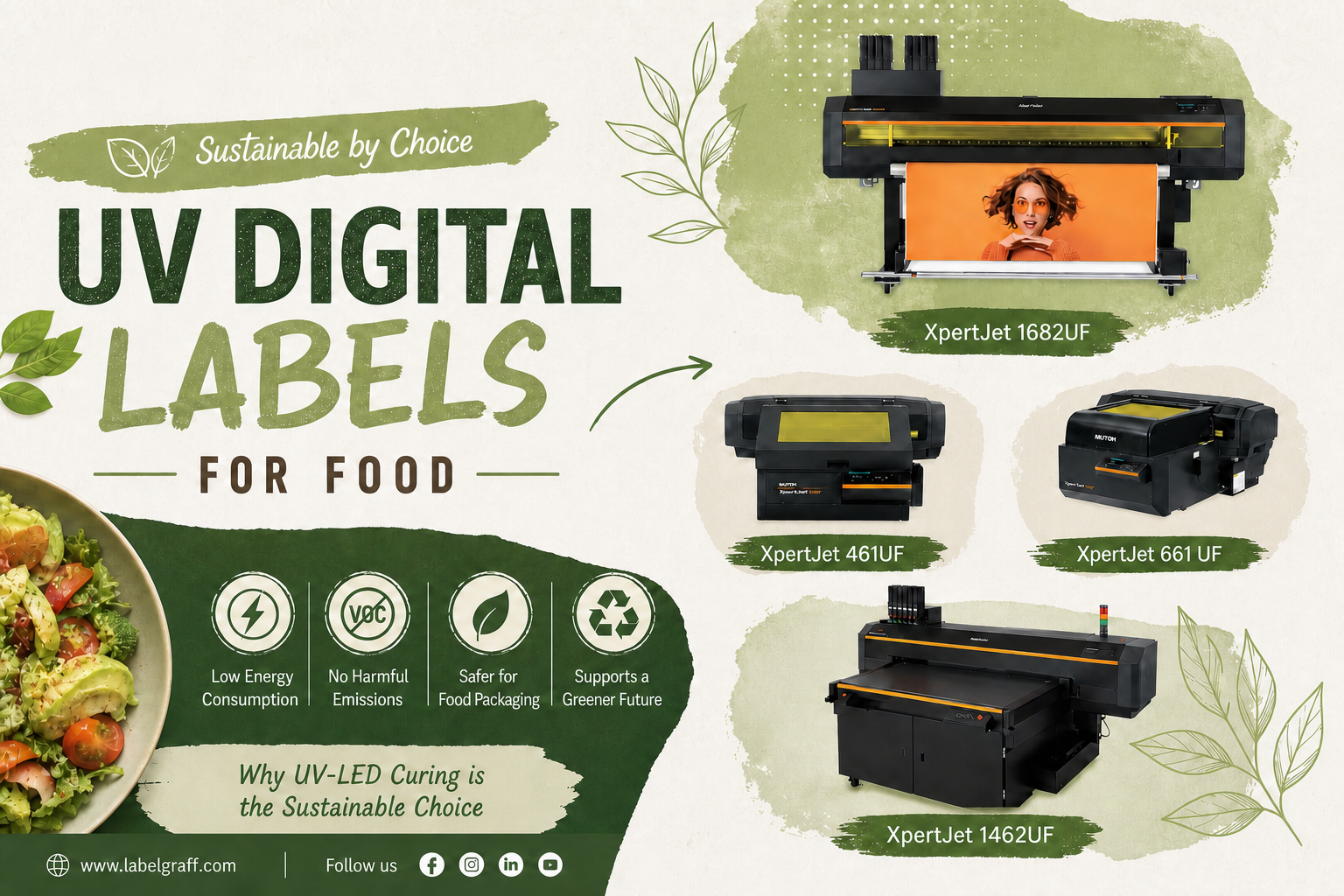
Labelgraff offers advanced flatbed UV printers designed specifically for food label applications and other packaging needs. Their printers feature multi-layer printing capabilities including CMYK, white, and varnish finishes, allowing businesses to produce professional labels in-house.
XpertJet 461UF: Compact Solution for Small Businesses
This A3+ compact tabletop printer is ideal for food businesses requiring small-lot production. It offers CMYK + white + varnish printing with spot varnish, structure printing, and embossing capabilities. Its ability to handle media up to 15 cm thickness makes it versatile for various label applications.
XpertJet 661UF: Medium Production Capacity
The A2+ compact tabletop printer includes a rotary system for 360-degree printing and automatic height adjustment. This model is perfect for medium-production food businesses that need flexibility and consistent quality.
XpertJet 1462UF: High-Productivity Solution
With a 142 x 70 cm table size and two staggered inkjet heads for fast multi-layer printing, this model is designed for high-production food label requirements. Its CMYK + white + varnish configuration ensures professional-quality labels at speed.
XpertJet 1682UF: Industrial-Grade Performance
This UV-LED printer offers speeds up to 27.3 m²/h with a maximum media width of 1625 mm. Featuring CMYK + white + varnish capabilities, it’s designed for large-scale food label production with Mutoh Transfer System technology.
The Role of UV-LED in Sustainable Label Production
Sustainability in label printing extends beyond the curing process. UV-LED technology supports circular economy principles through:
Waste Reduction
Digital UV-LED printing enables on-demand, short-run production, eliminating overproduction and reducing waste. Food businesses can print exactly what they need, when they need it, minimizing obsolete labels.
Lower Carbon Footprint
The combination of energy efficiency and reduced material waste significantly lowers the carbon footprint of label production. Recent innovations in UV-LED inks are also designed to support packaging recyclability.
Reduced VOC Emissions
Modern UV-LED inks are formulated with low volatile organic compound (VOC) content, improving workplace safety and reducing environmental impact. This aligns with food industry requirements for safe packaging materials.
Industry Support for UV-LED Technology
Leading industry organizations and manufacturers are increasingly endorsing UV-LED technology as a sustainable printing solution. Recent collaborations between major industry players aim to help label converters transition to UV-LED printing, reducing energy consumption while improving efficiency.
The quality of UV-LED printing has been enhanced significantly, with specialized inks and machinery innovations entering the market. Results achieved with advanced UV-LED systems are exceptional for food label applications, meeting both environmental and performance standards.
Making the Switch: Considerations for Food Businesses
Assessing Your Needs
Before investing in UV-LED technology, consider:
- Your typical production volumes
- The variety of label designs you require
- Your sustainability goals
- Available workspace
- Budget for equipment investment
Long-Term Benefits
While the initial investment in UV-LED technology may be significant, the long-term benefits include:
- Reduced energy costs
- Lower material waste
- Faster production times
- Enhanced print quality
- Improved sustainability credentials
Expert Support
Labelgraff provides comprehensive support for businesses transitioning to digital label printing, including equipment selection, training, and ongoing technical assistance. Their experience in the food sector ensures tailored solutions for specific label requirements.
Conclusion
UV-LED curing technology represents a significant advancement in sustainable food label production. By reducing energy consumption, eliminating harmful emissions, and supporting waste reduction, this technology helps food businesses meet their environmental goals without compromising quality.
The range of flatbed UV printers from Labelgraff offers food businesses of all sizes the opportunity to bring label production in-house, achieving greater control, faster turnaround, and improved sustainability. As consumer demand for sustainable products continues to grow, investing in UV-LED technology is not just an environmental choice—it’s a business imperative.
For more information about flatbed UV printers and sustainable label solutions, visit Labelgraff.com or contact their team for a personalized consultation.
Frequently Asked Questions (FAQs)
Q: What makes UV-LED printing more environmentally friendly than traditional curing methods?
A: UV-LED printing consumes significantly less energy, contains no mercury, produces no ozone, and eliminates harmful UV-C and UV-B radiation. The instant on-off capability reduces energy waste, making it a truly sustainable curing technology.
Q: Is UV-LED printing suitable for food contact applications?
A: Yes, modern UV-LED inks are formulated to meet food safety standards. However, it’s important to ensure your specific ink and substrate combination complies with relevant food contact regulations in your region.
Q: What materials can be printed on with flatbed UV printers?
A: UV-LED flatbed printers can print on a wide range of substrates including paper, film, synthetic materials, and even rigid surfaces. Their low-heat curing process makes them suitable for heat-sensitive materials commonly used in food packaging.
Q: Can UV-LED printing produce high-quality food labels?
A: Absolutely. UV-LED technology offers exceptional print quality with vibrant colors, sharp details, and excellent adhesion. The inks are durable against moisture, abrasion, and chemicals, making them ideal for food label applications.
Q: How does UV-LED printing compare to traditional screen printing for food labels?
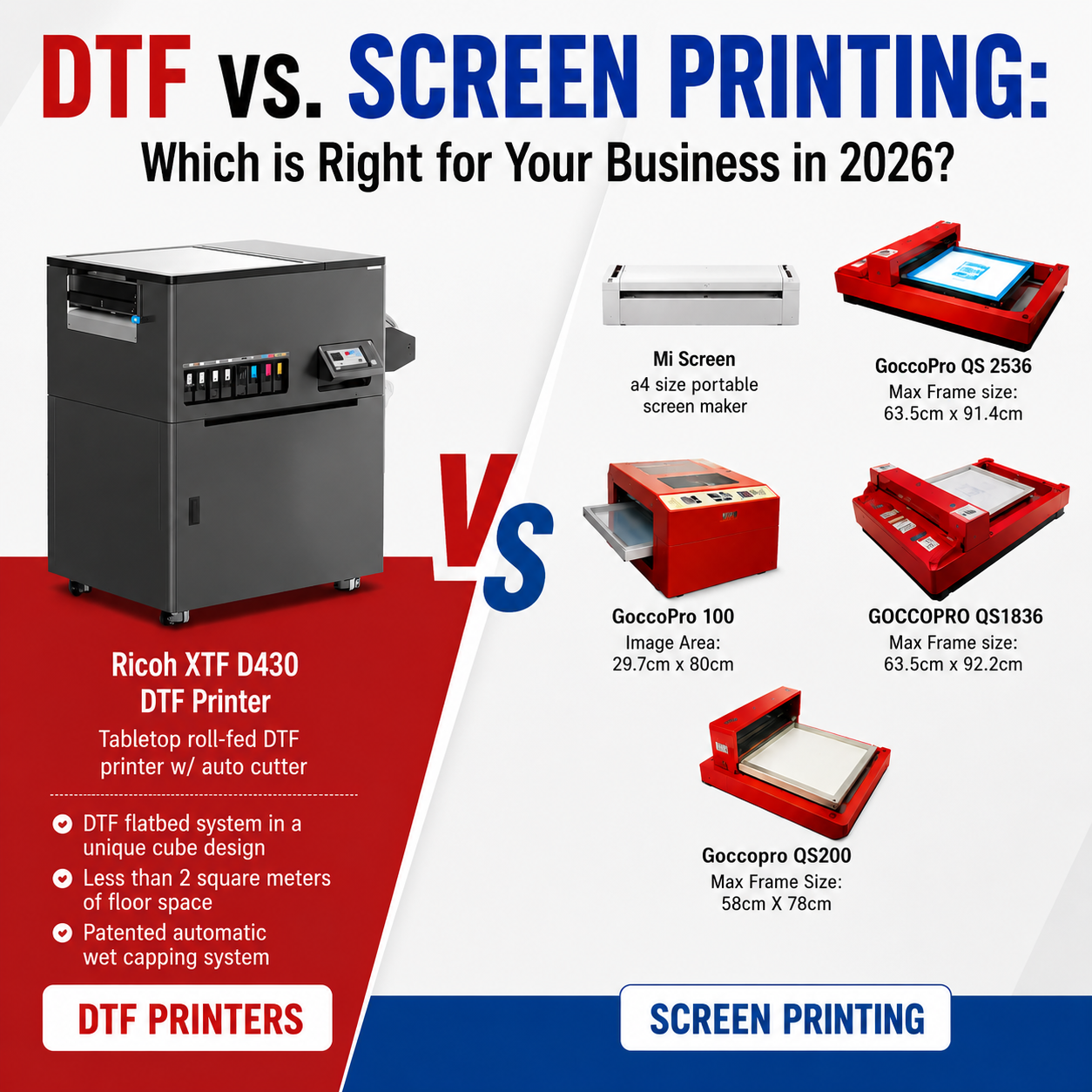
A: Digital UV-LED printing offers greater flexibility for short-run production, eliminates the need for screens, enables variable data printing, and reduces setup time. For food businesses needing smaller quantities or frequent design changes, UV-LED is often more practical and sustainable.
Q: What support does Labelgraff offer for businesses new to UV-LED printing?
A: Labelgraff provides comprehensive support including equipment selection, training, installation, and ongoing technical assistance. Their showroom in Sharjah allows businesses to experience printers firsthand before making a purchase decision.
Related Posts