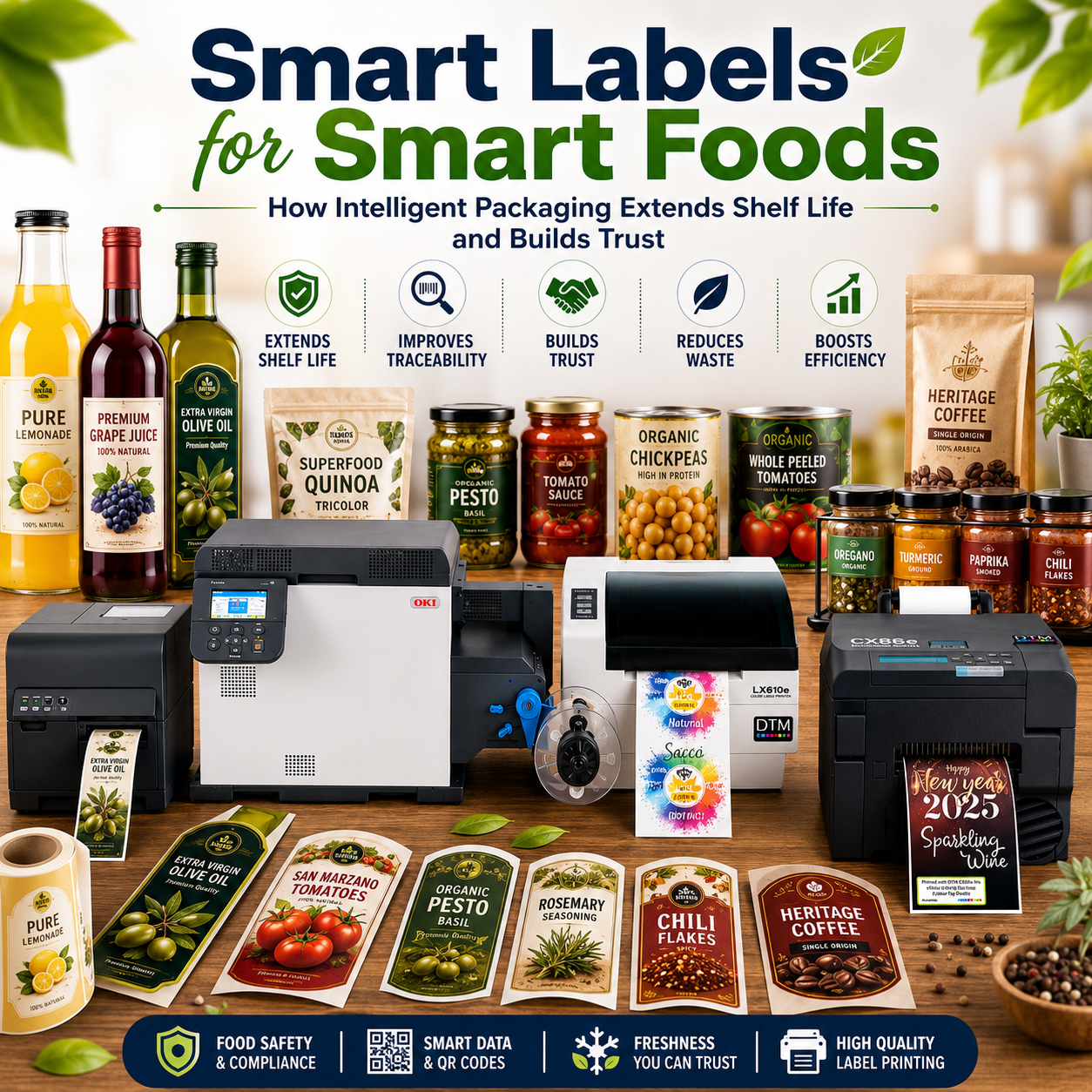
Smart Labels for Smart Foods: How Intelligent Packaging Extends Shelf Life and Builds Trust
The modern food industry faces a dual challenge: minimizing the staggering amount of food waste while meeting growing consumer demand for transparency and safety. With fruits and vegetables alone accounting for approximately 45% of global food wastage, traditional preservation methods are no longer sufficient. Enter smart labels and intelligent packaging—innovations that transform passive containers into responsive systems that monitor freshness, extend shelf life, and build consumer trust. This shift from static to intelligent packaging represents one of the most significant advancements in food safety and supply chain management in recent years.
What Are Smart Labels and Intelligent Packaging?
Smart labels are technologically advanced labels that provide far more than basic product information. They integrate features such as Quick Response (QR) codes, Radio Frequency Identification (RFID), Near Field Communication (NFC), and even biosensors to monitor, communicate, and verify the condition, authenticity, and lifecycle of food products. Intelligent packaging is defined as a system that senses and provides information about the condition of the product or the environment in which it is kept. This is distinct from active packaging, which actively modifies the internal environment to extend shelf life by releasing active agents or scavenging undesirable components.
These technologies incorporate printable labels and blockchain-enabled platforms, utilizing functional inks to augment traditional labels with dynamic capabilities. The result is packaging that can provide real-time access to essential data regarding product origin, ingredient details, nutritional content, allergen information, storage conditions, freshness, and regulatory disclosures. With a single scan using a smartphone, consumers can explore where ingredients came from, who certified them, and how the product aligns with their values.
How Smart Labels Extend Shelf Life
One of the most powerful applications of intelligent packaging is its ability to extend shelf life through advanced monitoring and preservation technologies. Time-temperature indicators (TTIs) are small stickers that change color depending on how long a product has been exposed to temperatures outside the recommended range. This allows supply chain stakeholders to track the cumulative thermal exposure of temperature-sensitive products in real time.
Freshness sensors and gas indicators provide biochemical indicators of spoilage by detecting volatile compounds associated with microbial activity. These visual intelligent labels can realize real-time perception and monitoring of meat freshness by measuring temperature, pH value, or other indicators and converting them into visual signals. Research has demonstrated that multifunctional labels can extend shelf life significantly—in one study, shrimp shelf life was extended by at least 6 hours at 25°C and 2 days at 4°C. Similarly, smart labels for refrigerated lamb extended shelf life by 3 days through rapid, non-contact freshness readouts.
Colorimetric freshness indicators, time-temperature integrators, biosensors, gas sensors, and digital interfaces enable real-time tracking of environmental factors that affect sensitive functional ingredients, including probiotics, omega-3 fatty acids, and vitamins. Through visible and digital signals, intelligent packaging rapidly detects spoilage and degradation, preserving nutritional value and extending product usability. AI-integrated flexible sensors enable millimeter-scale monitoring of temperature, humidity, gases, pH, and microbial metabolites, while AI-driven pipelines process multimodal sensor data to generate freshness scores, estimate shelf life, and detect anomalies.
Building Consumer Trust Through Transparency
Beyond extending shelf life, smart labels play a crucial role in building consumer trust. The growing demand for transparency, safety assurance, and regulatory compliance within the food supply chain has accelerated the implementation of advanced smart labeling systems. Their integration with traceability platforms enhances visibility throughout the supply chain, reinforcing accountability and trust among stakeholders.
Technological innovations such as smart labels can enhance food safety, traceability, and sustainability. By implementing smart labels, food products can promote consumer confidence and trust throughout the entire food supply chain. Smart packaging unlocks possibilities and ensures labeling and packaging is dynamic, real-time, and data-driven. This creates a direct, ownable connection with the consumer, powering digital storytelling, ingredient and allergen clarity, sustainability disclosures, and promotions that can be refreshed dynamically.
The Technology Acceptance Model (TAM) helps explain consumer adoption of new technologies, with research showing that perceived benefits and ease of use enhance willingness to adopt smart label technology. Smart labels can help consumers make more informed purchasing decisions. By embedding QR codes and smart labels into packaging, brands can move beyond marketing claims and give consumers verifiable, real-time access to the truth about their products. This transparency is particularly valuable in an era where consumers increasingly demand to know the origins and handling of their food.
Smart Labels Across Food Categories
Specialty Foods and Artisanal Products
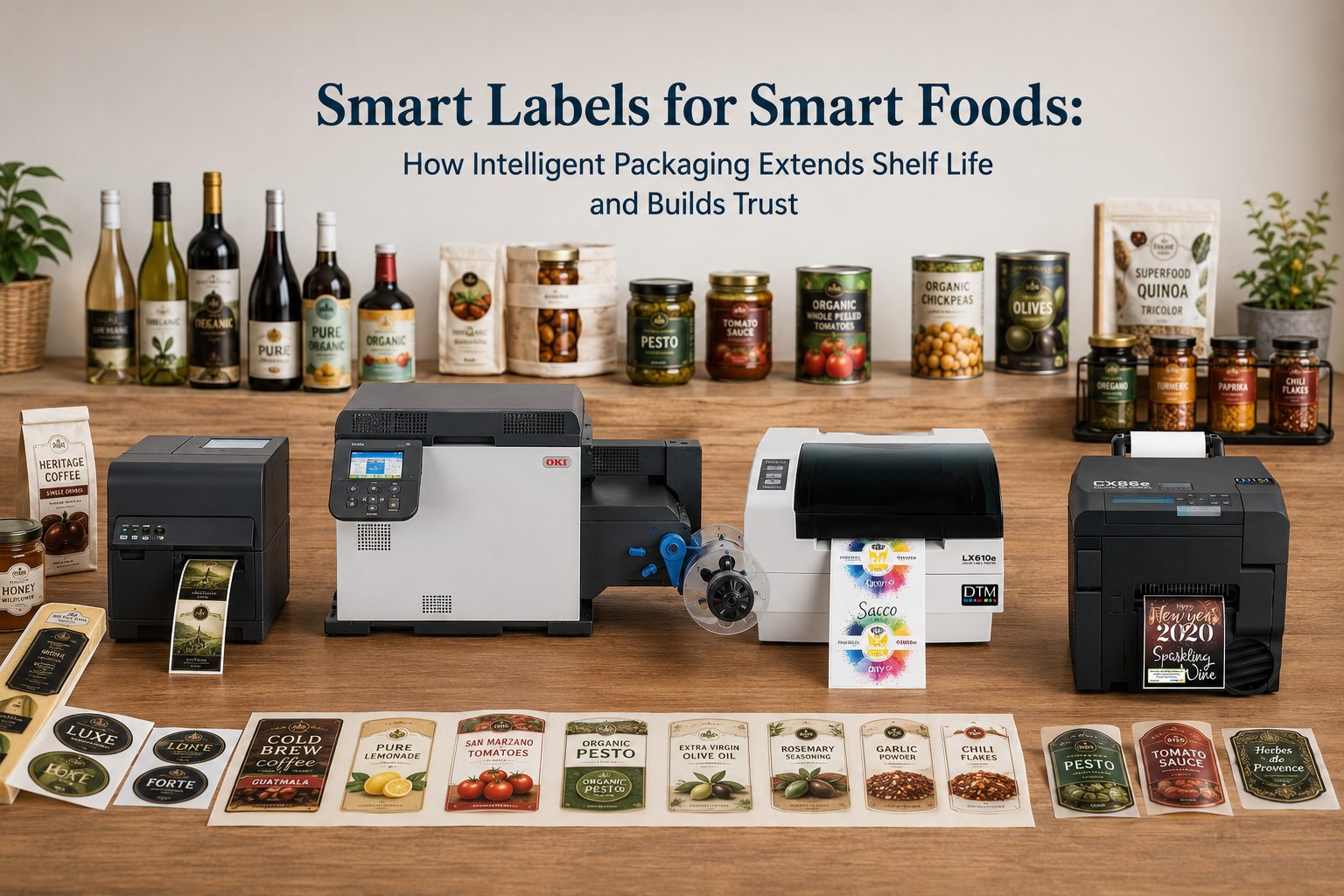
For specialty foods—including pastries, candies, chocolates, and organic products—smart labels offer particular advantages. Accurate food labeling is essential for understanding product contents, especially as consumers become increasingly health-conscious. Intelligent packaging helps preserve the quality and integrity of these premium products throughout the supply chain. With Labelgraff‘s specialty food label solutions, brands can produce labels on demand without minimum order quantities, eliminating delays and reducing storage costs. This flexibility is crucial for specialty food producers who often have diverse product lines requiring different label designs.
Bottled Foods and Beverages
The bottled food and beverage sector benefits enormously from smart labeling technologies. From QR codes that unlock immersive experiences to smart caps that detect spoilage and NFC tags that recommend personalized recipes, packaging in food and beverage is evolving far beyond its traditional role of storage and transport. What was once a passive container is now becoming a powerful digital touchpoint—delivering richer product information, combating food waste, enabling greater transparency, and building brand loyalty. Labelgraff‘s bottled food and beverage labeling solutions help manufacturers create durable, high-quality labels that withstand various environmental conditions while incorporating smart features like QR codes and barcodes.
Spices and Seasonings
Spices and seasoning manufacturers face unique challenges, including a wide variety of kinds, types, flavors, and shapes that require different labeling approaches. High competition in today’s market demands exceptional packaging structure and quality. Smart labels for spices and seasonings must be non-tearable, water-resistant, alcohol-resistant, and UV-resistant to prevent fading. With Labelgraff‘s spice and seasoning labeling solutions, manufacturers can print on demand with no minimum order quantities, modify QR codes and barcodes easily, and maintain high quality with durable materials. These capabilities are particularly valuable for businesses that need to update labels frequently to reflect new formulations, seasonal offerings, or regulatory changes.
The Future of Smart Food Labeling
The smart food label market is experiencing rapid growth driven by increasing consumer demand for transparency, food safety, and innovative packaging solutions. As technology advances, manufacturers are adopting smart labels to provide real-time information, enhance traceability, and improve supply chain efficiency. The industry has reached a tipping point where multiple smart packaging technologies are now feasible at scale because the data behind them can be managed and connected via open standards and cloud platforms.
From a regulatory standpoint, smart labeling systems facilitate adherence to international food standards by offering extended label information without increasing packaging space. They also contribute to sustainability objectives by minimizing the use of printed materials and enabling the digital communication of environmental and recycling information. A label that indicates a product is still fresh—even if the “best before” date has passed—can encourage more sustainable consumption habits.
By connecting laboratory data, production parameters, and intelligent packaging into a unified framework, the industry is transforming shelf life management from empirical judgment to a predictive, transparent, and science-validated framework—strengthening both food safety and consumer confidence.
Conclusion
Smart labels and intelligent packaging represent a transformative advancement in food packaging, offering effective solutions to contemporary challenges in food safety management, traceability, and regulatory compliance. By extending shelf life through real-time freshness monitoring and building consumer trust through unprecedented transparency, these technologies are reshaping the relationship between food producers, retailers, and consumers.
For food businesses looking to embrace this intelligent packaging revolution, partnering with experienced label providers is essential. Labelgraff offers comprehensive solutions for specialty food labels, bottled food and beverage labeling, and spices and seasoning labels, enabling brands to produce high-quality, durable labels in-house with no minimum order quantities, no delays, and unlimited design flexibility.
As the food industry continues to evolve, smart labels will play an increasingly vital role in ensuring food safety, reducing waste, and building the trust that today’s consumers demand. The question is no longer whether to adopt intelligent packaging, but how quickly businesses can integrate these transformative technologies into their operations.
Frequently Asked Questions (FAQs) About Smart Food Labels
- What exactly are “smart labels” in the food industry?
Smart labels are technologically enhanced packaging tools that go far beyond traditional branding and nutritional facts. They integrate features like QR codes, NFC (Near Field Communication)chips, RFID tags, and color-changing biosensors. These elements allow the packaging to monitor environmental conditions (like temperature and humidity), provide real-time traceability, and share dynamic digital content—such as origin stories, allergen updates, and freshness data—directly to a consumer’s smartphone with a single tap or scan. - How do intelligent packaging labels actually extend shelf life?
Intelligent labels extend shelf life primarily through real-time environmental monitoring. For instance, Time-Temperature Indicators (TTIs)visibly change color if a product has been exposed to unsafe temperatures, allowing logistics teams to remove compromised stock early. Additionally, freshness sensors detect spoilage gases (like ammonia or carbon dioxide) and alert stakeholders before decay spreads. By ensuring that food is stored and transported under optimal conditions from farm to fork, these labels significantly reduce premature spoilage—with some studies showing shelf life extensions of up to 2 to 3 daysfor perishable goods like meat and seafood. - Are smart labels affordable for small-batch or artisanal food producers?
Absolutely. The barrier to entry has lowered drastically with print-on-demand technologies. You no longer need to order millions of units to implement smart features. For artisanal producers, simply embedding a dynamic QR code into your labels provides “smart” functionality without the high cost of microchips. If you are looking for a cost-effective way to start, exploring Labelgraff’s specialty food label solutionsallows you to print high-quality, durable labels on demand with zero minimum order quantities, making intelligent packaging accessible for businesses of any size. - How do smart labels build consumer trust regarding food safety?
Trust is built through radical transparency. In an era of supply chain uncertainty, smart labels allow consumers to verify the journey of their food instantly. By scanning a label, shoppers can view lab-tested nutritional data, certifications (like Organic or Non-GMO), harvest dates, and blockchain-verified handling logs. This removes the ambiguity behind generic “Best By” dates and empowers consumers to make safer, informed purchasing decisions, fostering a deeper, trust-based relationship between the brand and the buyer. - Do these labels work for bottled beverages and liquids?
Yes, but they require durable materials. Bottled beverages face moisture, condensation, and friction during shipping. Smart labels for this sector often utilize water-resistant substrates and robust adhesivesto ensure the QR codes and barcodes remain scannable throughout the product’s lifecycle. Whether it is a premium juice or a craft soda, Labelgraff’s bottled food & beverage labeling solutionsprovide the necessary durability to keep your intelligent packaging intact and interactive, even in challenging refrigeration environments. - Can I use smart labels on spices and seasonings, which often have oily surfaces?
Yes, but material selection is critical. Spices and seasonings often contain volatile oils that can degrade standard label adhesives and cause fading. Smart labels designed for spices must be non-tearable, oil-resistant, and UV-resistantto prevent the QR codes from becoming unreadable. Using specialized solutions, like those available at Labelgraff’s spice and seasoning page, ensures your intelligent labels maintain their readability and aesthetic appeal despite the harsh, powdery, or oily conditions of a busy kitchen or processing plant. - Do I need special printing equipment to create smart labels for my food products?
Not necessarily. For basic smart functionality (like QR codes linking to dynamic landing pages), you can use standard digital printers. However, to achieve professional-grade durability and precision, it is highly recommended to use custom printing partners. Working with a dedicated provider allows you to seamlessly integrate barcodes, serialized tracking numbers, and high-resolution graphics without investing in expensive industrial hardware, all while keeping your turnaround times fast. - How do smart labels help with regulatory compliance and recalls?
Smart labels revolutionize recall management. In the event of a contamination or allergen issue, intelligent packaging with traceability features allows manufacturers to pinpoint the exact batch and distribution route instantly. This agility prevents broad, costly recalls and protects public health more efficiently. Furthermore, because digital smart labels can host extended information, they help brands comply with international labeling standards without cluttering the physical packaging with excessive text.
Ready to Transform Your Packaging Strategy?
Embracing intelligent packaging doesn’t have to be complicated. Whether you need custom, durable labels for spices, moisture-resistant solutions for bottled beverages, or versatile designs for specialty foods, Labelgraff offers the flexibility and quality you need to start today. Visit Labelgraff.com to order professional-grade labels with no minimums, no delays, and unlimited
Related Posts